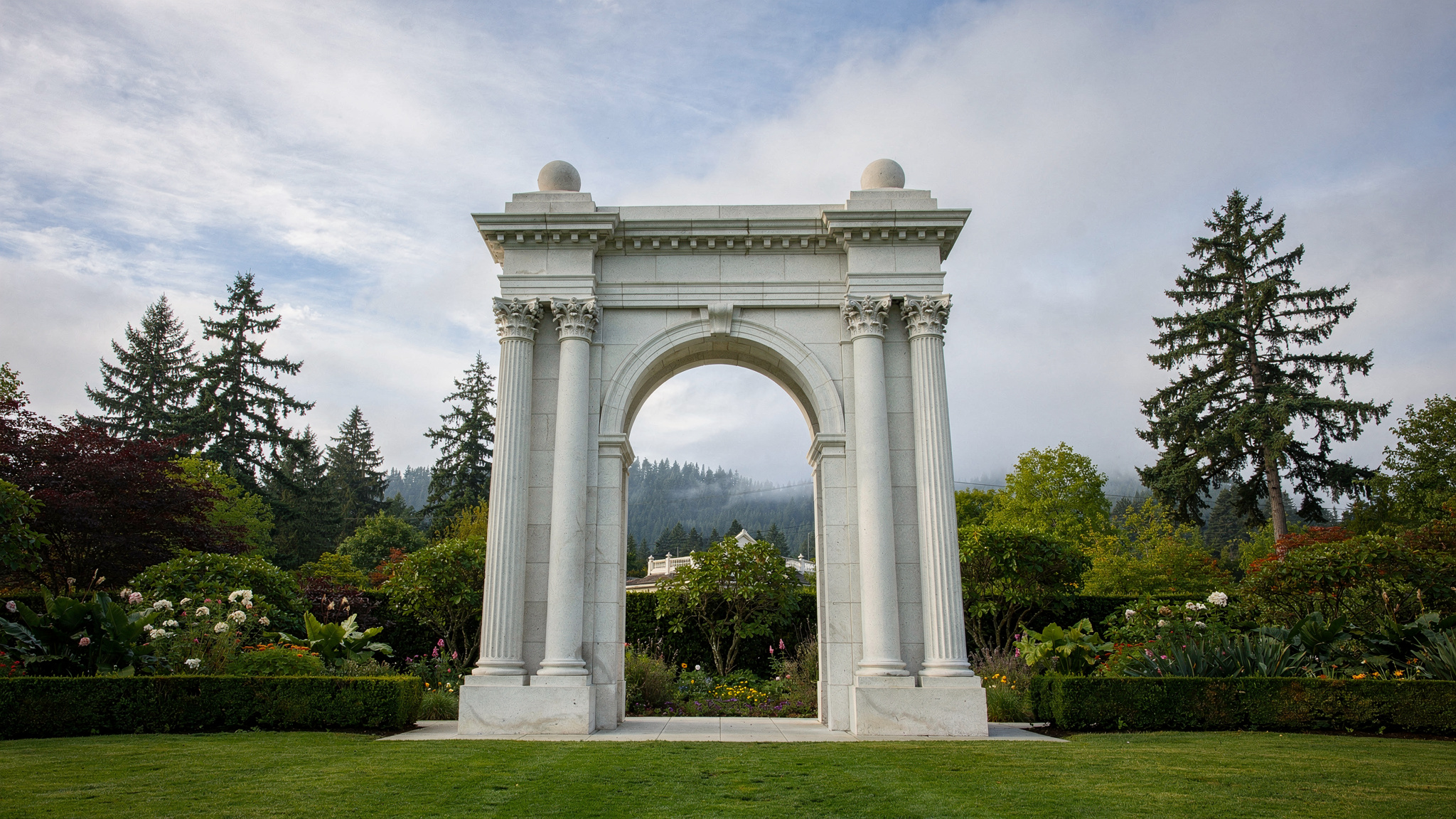
A few minutes south of White Rock, right where Highway 99 gives way to Interstate 5, there is a stretch of manicured lawn and formal garden where you can do something that feels faintly impossible until you have actually done it, which is stand with one foot in Canada and one foot in the United States without showing a passport to anyone. That is Peace Arch Provincial Park, home to the tall white monument that has marked this exact spot on the border for more than a century, and it remains one of the more unusual and quietly moving day trips in the whole Lower Mainland.
We have brought out of town visitors here more times than we can count, partly because the arch itself is genuinely striking in person and partly because the story behind it, of two countries choosing to mark peace instead of a fence, still lands even after you have heard it a few times. This is our local guide to what the park actually contains, the history worth knowing before you go, and the practical rules around parking, gates, and the border that catch first time visitors off guard.

The Arch Itself: A Monument Built on the Border
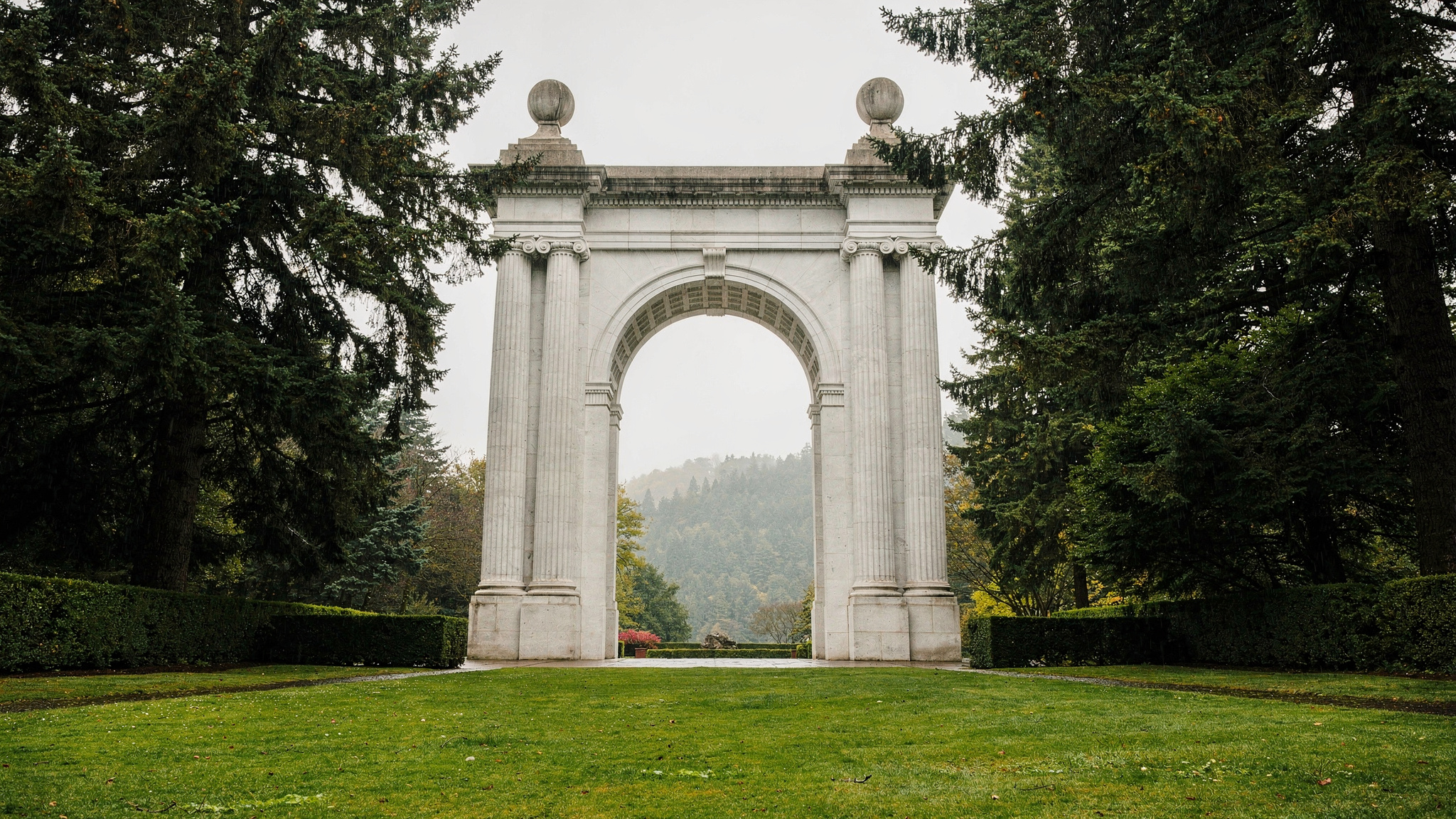
The Peace Arch stands about 67 feet tall and sits directly on the 49th parallel, the international boundary line running straight beneath it, which is why you can walk from one country to the other underneath it without a single formality. American lawyer and road builder Sam Hill organized the fundraising and construction, with architect Harvey Wiley Corbett donating the design, and the arch was dedicated on September 6, 1921 in front of a crowd estimated at around 15,000 people. It commemorates the Treaty of Ghent, which ended the War of 1812 in 1814, and it was built as one of the earliest earthquake resistant structures of its kind in North America.
The inscriptions are worth reading slowly rather than glancing past. On the American facing side, carved words read Children of a Common Mother, while the Canadian facing side reads Brethren Dwelling Together in Unity, a line drawn from the Book of Psalms. Inside the arch itself, iron gates are mounted on the boundary, and above them the inscriptions read May These Gates Never Be Closed on one side and 1814 Open One Hundred Years 1914 on the other, a phrase that has taken on extra weight during the periods when the physical border crossing nearby has actually been restricted.
What You Will Actually Find in the Park
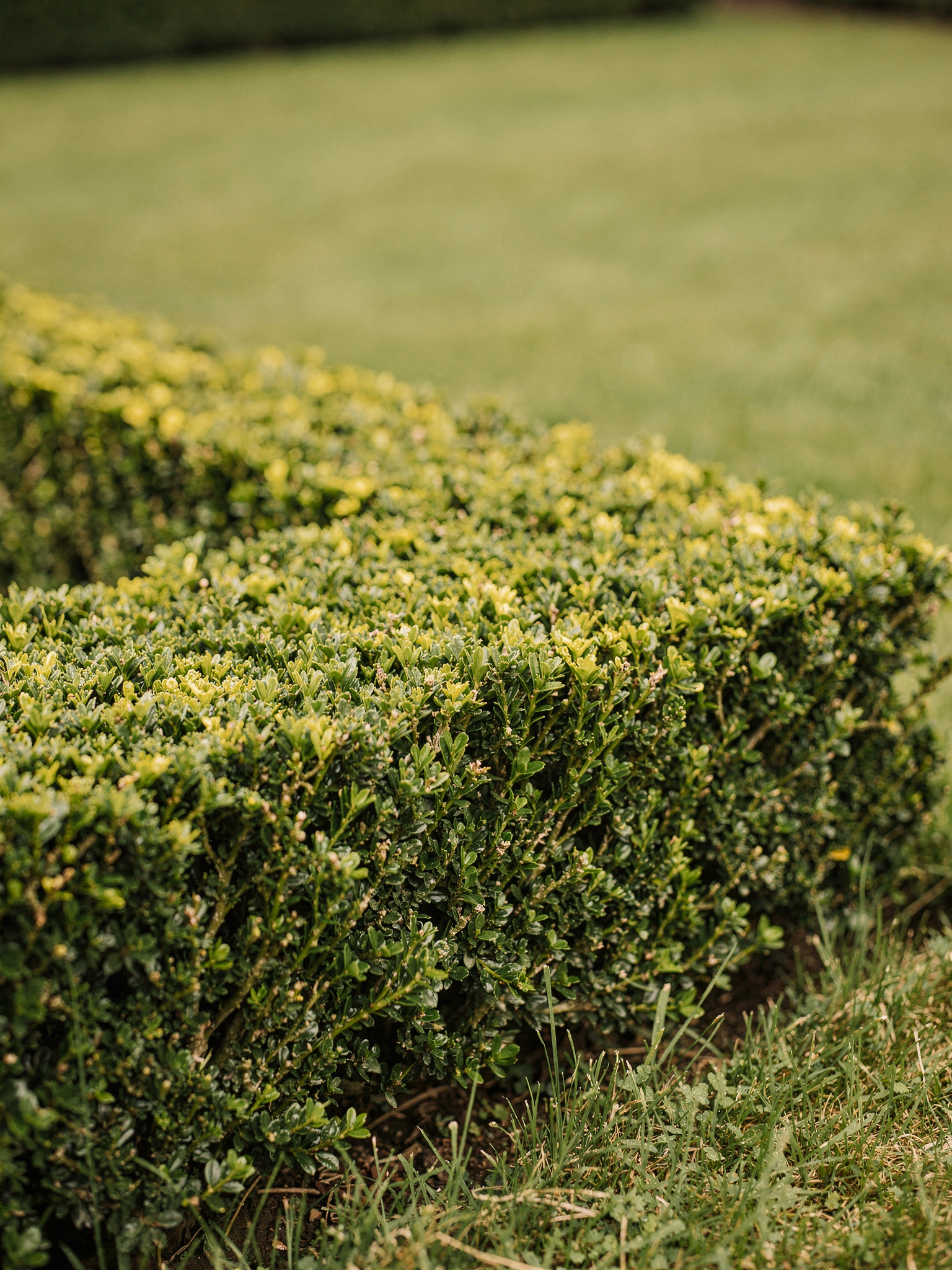
Peace Arch Provincial Park on the Canadian side covers a little over 20 acres of formal lawns and gardens, maintained as a partnership between BC Parks and Washington State Parks, since the park exists on both sides of the line as one connected green space even though each country manages its own portion. The grounds include clipped flower beds and a lily pond, wide open lawns that invite a picnic, and roughly three dozen picnic tables scattered through the grassy areas, along with a heritage hall available for day use bookings between April and October.
There is no beach access from the park itself even though it sits close to Semiahmoo Bay, and camping and overnight stays are never permitted anywhere on the grounds. Wheelchair accessible washrooms are available, connected to the parking area by a paved path, and water taps are placed around the park through the warmer months. It is a quiet, contemplative sort of park by design, closer in feeling to a formal civic garden than a wilderness trail system, and that is very much the point given what the space is meant to represent.
Standing in Two Countries at Once
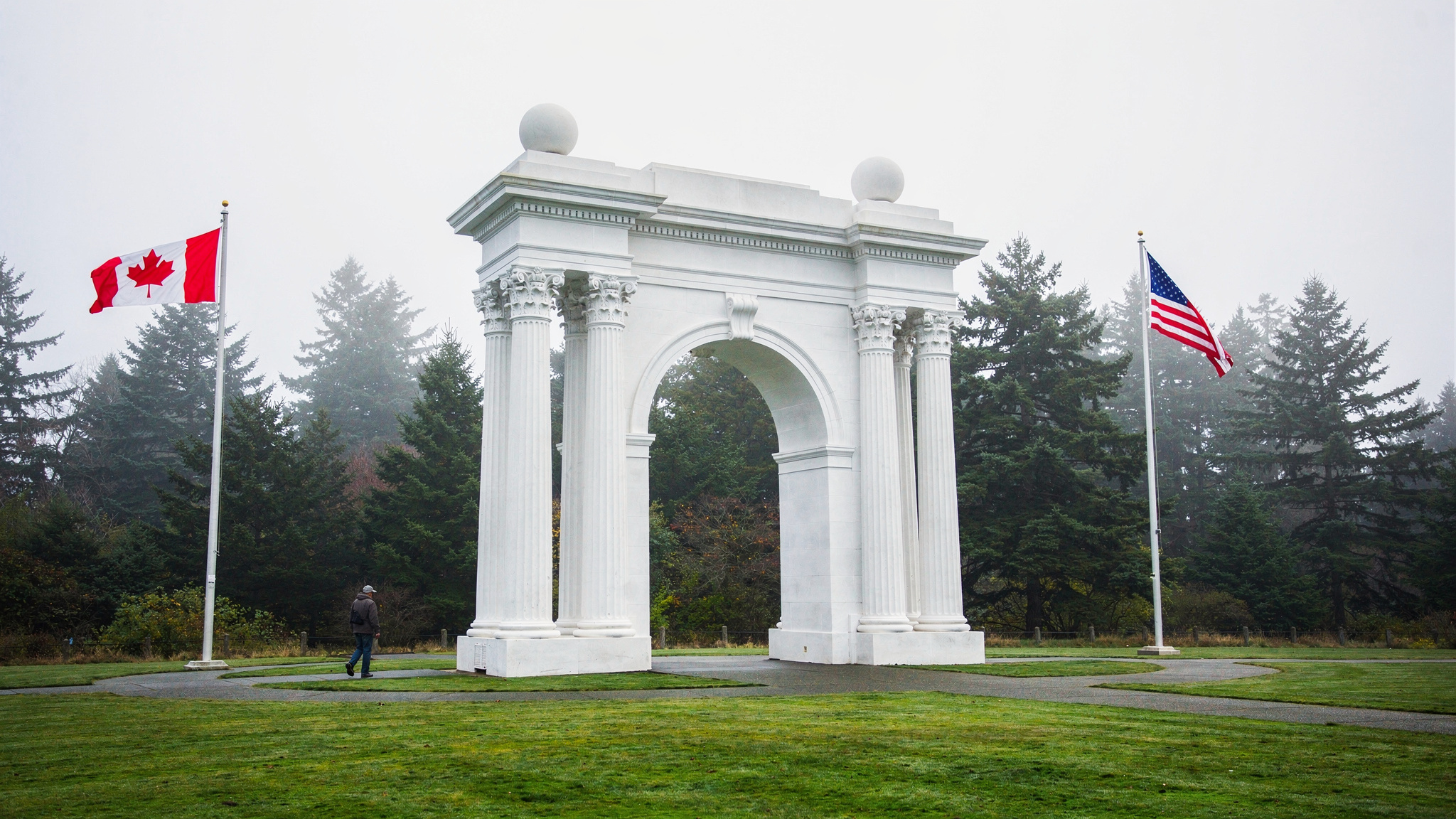
The reason people make the trip is usually the same one, the simple novelty and genuine emotional pull of standing exactly on an international border, one foot on each side, in a place that has been deliberately kept open rather than fenced. Visitors are free to walk the grounds on both the Canadian and American sides of the park itself, and for generations that openness has made the arch a meeting point for separated families, a stage for performers including Paul Robeson, who famously sang concerts here in the 1950s to crowds gathered on both sides, and a stop on the 2010 Olympic Torch Relay.
That said, the openness applies to the park grounds themselves, not to leaving them. Stepping outside the park boundary into either country without going through the official Douglas or Peace Arch border crossing is treated as an unauthorized crossing, and border officials do patrol and monitor the area, so this is very much a look and stand and photograph experience rather than a casual way to slip between countries. Most visitors simply walk the lawns, find the boundary marker, and take the classic one foot in Canada, one foot in the United States photo before heading back to their own side.
Visiting Peace Arch Park: What to Know Before You Go
The park sits right at the Douglas border crossing where Highway 99 becomes Interstate 5, a short drive south of White Rock and Surrey, and there is a single designated parking lot for visitors, with gates typically open daily from 8 am to 8 pm. Parking is not permitted along Beach Road or the park access road, so plan on using the main lot rather than looking for street parking nearby.
A few rules are worth knowing ahead of time. Pets are welcome but must stay leashed, drones are not permitted without prior permission, and any day use shelter or canopy needs to be open sided and taken down by the end of the day, since overnight structures and camping are not allowed anywhere on the grounds. Because this is still an active border zone, border services officers can and do ask visitors for identification, so it is sensible to bring photo ID even though you are not making an official crossing.
The most comfortable times to visit tend to be a weekday morning or a quiet shoulder season afternoon, when the lawns are calm and the light is soft for photos. If you are building a bigger day out of it, pair the visit with a stop at the White Rock waterfront afterward, since our guide to summer events in White Rock covers what else is happening around town on any given weekend.
The Two Sides of One Shared Park
It helps to understand that Peace Arch Park is really two adjoining parks that function as one. The Canadian side is Peace Arch Provincial Park, managed by BC Parks, while the American side is Peace Arch Historical State Park, managed by Washington State Parks, and the two agencies coordinate so the lawns, gardens, and the arch itself read as a single continuous space rather than two separate properties glued together at a fence line. You can read more directly from each agency at BC Parks and Washington State Parks before you go, since hours, closures, and reservation details are always best confirmed at the source.
This shared management is also why the park has become such a meaningful gathering spot during periods when the formal border crossing was restricted, most notably through the pandemic years, when separated couples and families used the open lawns as a legal place to meet in person without crossing through customs. That history is not something signage really explains on site, but knowing it changes how the quiet green space in front of you reads once you are standing there.
A Few Things We Always Do
We always bring photo ID, even though a visit to the park lawns is not an official border crossing, simply because this is an active border zone and officers do sometimes ask. We also try to go in the morning or on a weekday, since the park is popular with tour groups and the lawns are far more peaceful before the day gets busy.
We treat it as a slow, contemplative stop rather than a long outing. Bring a picnic if the weather is good, since there are tables scattered through the grass, but plan your bigger meal or coffee stop for White Rock itself, because the park does not have food service on site. And we always take a minute to actually read the inscriptions on the arch rather than just photographing it, because the words are a real part of what makes the place worth visiting.
Finally, we keep in mind that this is a look, don’t leave kind of border experience. Enjoy the openness of walking the shared lawns, but head back through the official crossing if you actually want to cross into the other country that day.
Questions Often Asked
Can I really stand in Canada and the United States at the same time at Peace Arch Park?
Yes. The Peace Arch monument sits directly on the 49th parallel, the international boundary, and the surrounding lawns on both sides are open for visitors to walk without going through a formal border crossing. It is the main reason people make the trip, and the classic photo is one foot on each side of the line near the arch itself.
Do I need a passport to visit Peace Arch Park?
You do not need to present a passport simply to walk the shared park lawns on both sides of the arch, since that movement happens within the park grounds rather than through an official crossing. That said, border services officers patrol the area and can ask visitors for identification, so it is smart to bring photo ID, and if you plan to actually leave the park into the other country by road, you will go through the regular Douglas or Peace Arch border crossing with the usual documents.
How old is the Peace Arch monument?
The arch was dedicated on September 6, 1921, funded through a campaign organized by American lawyer Sam Hill with a design donated by architect Harvey Wiley Corbett. It commemorates the Treaty of Ghent, which ended the War of 1812 in 1814, and it was considered one of the first earthquake resistant monuments built in North America.
Is there a beach at Peace Arch Park?
No. The park sits close to Semiahmoo Bay but there is no beach access from the park grounds itself. It is a formal lawn and garden park built around the monument, with picnic tables and washrooms rather than waterfront access, so if you want beach time plan a separate stop at the White Rock waterfront.
Can I camp or stay overnight at Peace Arch Park?
No, camping and overnight stays are never permitted anywhere in the park, on either the Canadian or American side. It is a day use park only, with gates that typically open and close on a set daily schedule, so plan your visit as a daytime outing.